
A few weeks ago, I had the opportunity to speak at The Economist Impact on Obesity and Metabolic Health, an event that brought together several leading voices in the obesity field. Representatives from the World Health Organization, the World Obesity Federation, Members of the European Parliament, Ministers of Health, scientists, clinicians, patient organisations, and other stakeholders gathered to discuss one of the most pressing public health challenges of our time.
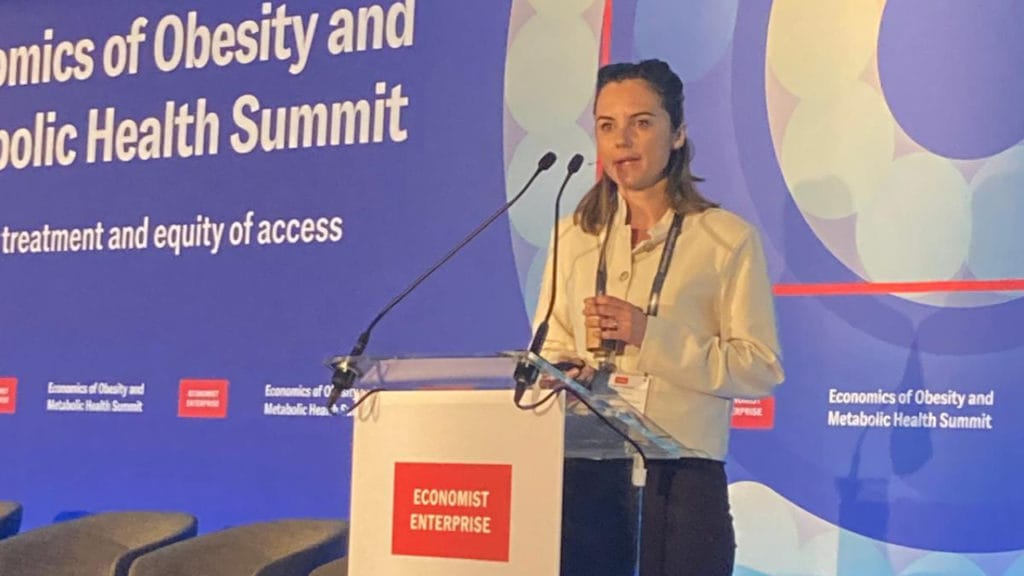
As a basic and translational scientist, it was both humbling and inspiring to contribute to a conversation taking place at the intersection of science, policy, and public health.
I was invited to share the Italian experience. Italy has recently achieved a historic legislative milestone: the world’s first law specifically dedicated to obesity as a disease. The legislation aims to promote equitable, evidence-based access to care, strengthen professional education and training, and support prevention strategies across the lifespan.
Beyond the legislation itself, this achievement reflects a broader shift in how obesity is understood. For decades, obesity was largely framed as a matter of individual responsibility. The new law helps move the conversation towards a healthcare system response, recognising obesity as a complex, chronic, and progressive disease that requires prevention, diagnosis, care, and long-term management. In doing so, it firmly places obesity among the priorities of public health.
What struck me most in Brussels was the level of interest this achievement has generated across Europe. Many countries are looking at the Italian experience with genuine curiosity, seeking to understand not only what was achieved, but how it was achieved.
And that question—how?—is perhaps the most important one.
Because legislative milestones rarely begin in parliament.
They begin with conversations.
One of the key lessons from Italy’s journey is that policy change first required a change in the narrative around obesity. That transformation did not happen overnight. It emerged gradually through scientific meetings, awareness campaigns, institutional events, parliamentary discussions, educational initiatives, patient advocacy, and public engagement.
Most importantly, it emerged through dialogue.
Researchers, healthcare professionals, policymakers, patient advocates, and citizens brought different perspectives to the table, but increasingly shared the same message: obesity deserves recognition, care, and action.
Over time, that collective voice became impossible to ignore.
This is something I would say to anyone who wonders whether they have a role to play in driving change.
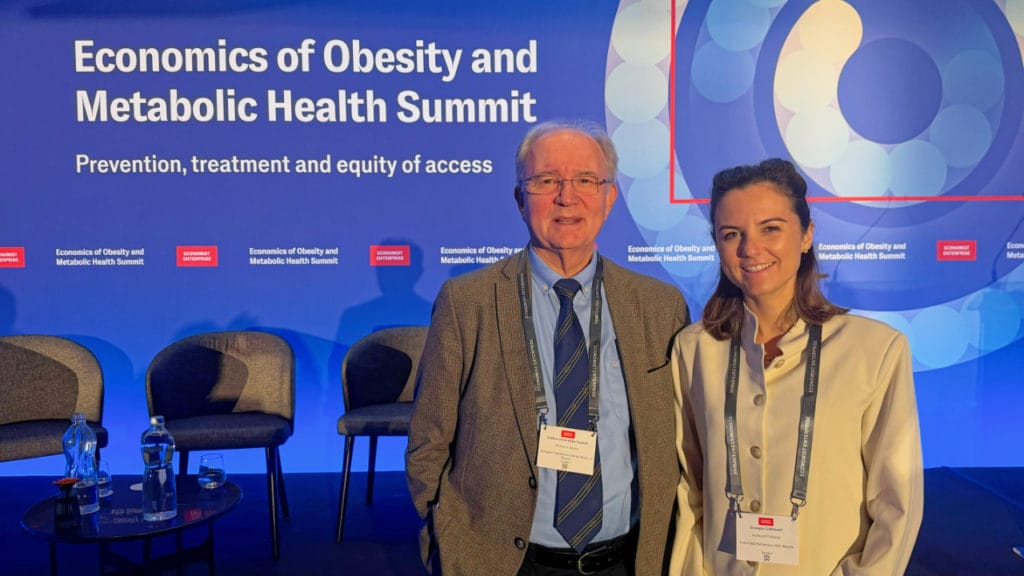
You may be a scientist, a healthcare professional, a person living with obesity, an educator, or someone working in a completely different field. You may be at the beginning of your career. It is easy to assume that influencing public policy is someone else’s responsibility.
Yet every milestone in Italy’s journey towards recognising obesity as a disease—and ultimately securing dedicated legislation—began because someone decided to take a single step forward.
I certainly never imagined that one day I would be speaking about a national obesity law at a European forum. My own contribution began as a PhD student, bringing conversations about obesity into spaces where they were rarely taking place, helping people understand the neurobiological foundations of obesity, and raising awareness about weight stigma.
None of that felt revolutionary at the time.
Looking back, I realise that meaningful change rarely begins with a single transformative act. More often, it grows through persistence, collaboration, and the cumulative efforts of many people working from different perspectives and in different roles.
And when enough people contribute, something powerful happens.
A conversation becomes a movement.
A movement attracts political attention.
And political attention can ultimately translate into meaningful improvements for people living with obesity and for society as a whole.
This was one of the strongest messages I took away from Brussels. The event brought together people from different disciplines, sectors, and institutions, all working towards a common goal. Science and policy are often portrayed as separate worlds, yet meaningful progress happens when they engage with one another. The same is true across professions and sectors.
The lesson is simple: meaningful change does not belong to a particular profession, title, or position. Each of us can contribute from where we are, using the knowledge, skills, and opportunities available to us. No matter our background, we all have the ability to move an important conversation forward.
And sometimes, that is exactly where lasting change begins.
 English
  French