
EASO colleagues contributed to important European health policy discussions at Dublin Castle, Ireland, on 16–17 November 2026, as part of Ireland’s Presidency of the Council of the European Union.
The conference, “Maximising EU Potential through Health: Securing Our Future through Prevention, Innovation and Equity”, brought together policymakers, public health experts, clinicians and stakeholders to explore how prevention, innovation and equitable access to healthcare can strengthen health systems across Europe.
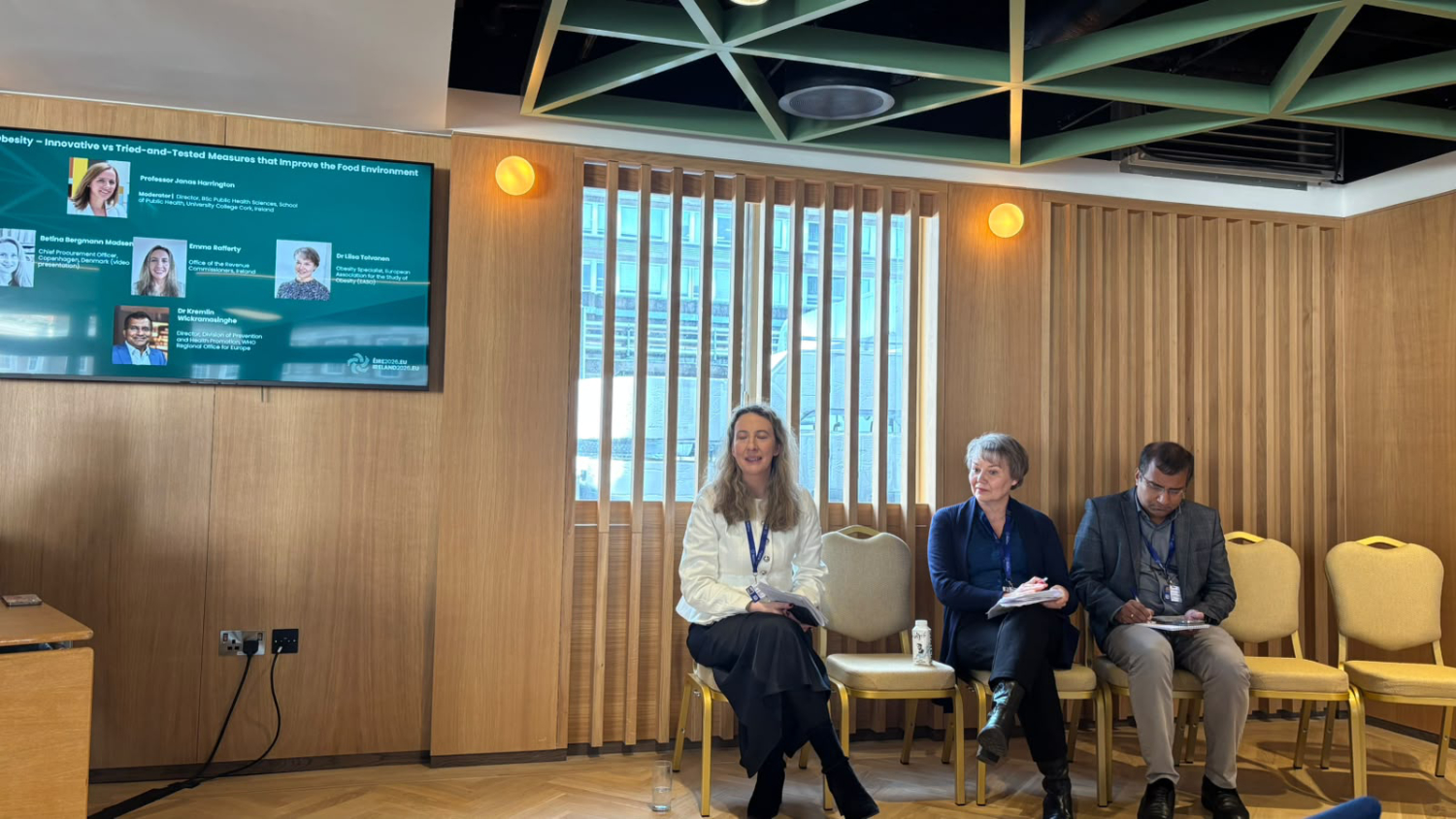
With prevention at the heart of the programme, sessions explored health inequalities, healthier food environments, protecting children and adolescents from harmful food marketing, and integrating obesity management medications (OMMs) within comprehensive, person-centred care.
EASO colleagues Dr Andreea Ciudin, Co-Chair of the EASO Obesity Management Working Group; Dr Rebecca Evans, EASO Early Career Network (ECN) Board Member; and Liisa Tolvanen, a Registered Dietitian with extensive experience in obesity care, research and education, participated in the event, contributing expertise and perspectives on obesity science, clinical management and public health.
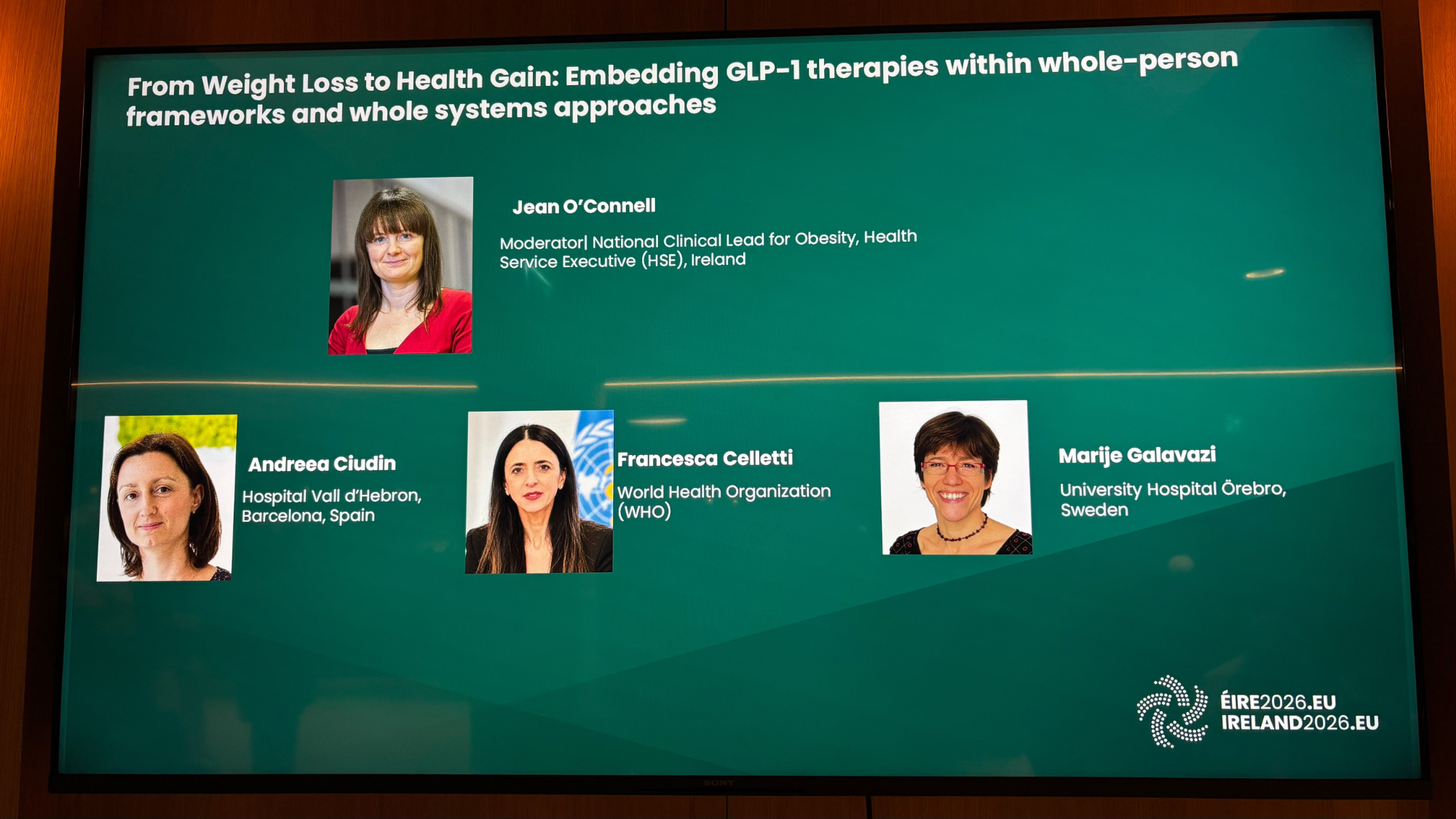
Dr Ciudin joined the session “From Weight Loss to Health Gain: Embedding GLP-1 Therapies”, moderated by Dr Jean O’Connell, EASO Trustee. The programme also addressed the commercial determinants of health and opportunities for coordinated European policy action.
The discussions reinforced the importance of recognising obesity as a chronic, relapsing disease in its own right, alongside its contribution to other noncommunicable diseases. Effective prevention must be complemented by evidence-based screening, diagnosis, and management, with equitable access to care and meaningful engagement of people living with obesity.
 English
 French